
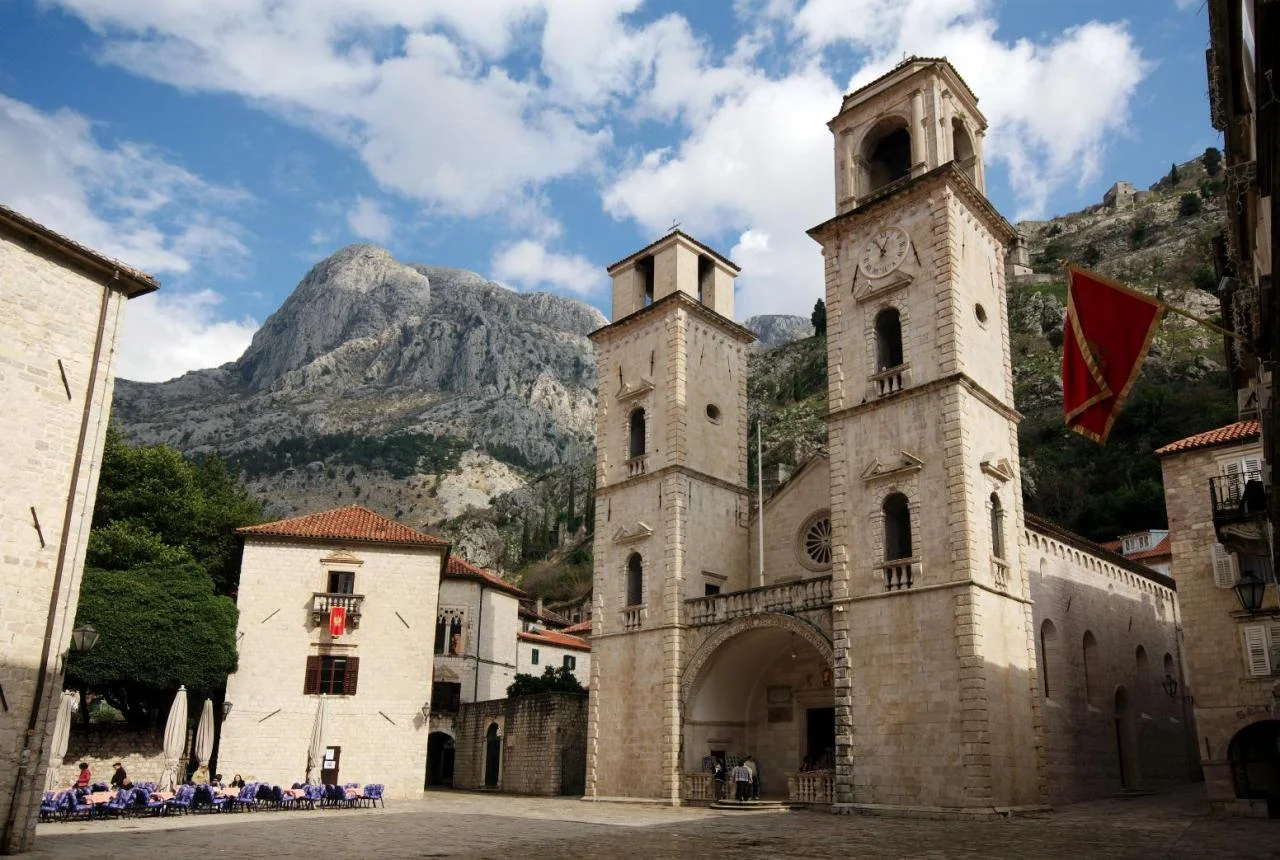
HOT TIPS FROM EURO-CONTRIBUTOR ANDY ELLIS AFTER HIS RECENT MONTENEGRIAN ADVENTURE.
The Bay of Kotor.
The singular most striking of Montenegro’s many impressive outdoor fixtures, unfortunately it also has the heaviest tourism influence (it still isn’t that bad).

A panoramic view of the bay.
Montenegro’s coast is situated along the Adriatic Sea which is itself nestled within the Mediterranean East of Italy.
The Bay of Kotor is often referred to as “the fjord of the Mediterranean,” and though it is geologically inaccurate, appearance-wise, the name fits.The sea snakes it’s way inland with large mountains looming from either side creating a distinctly upper Scandinavian appearance with a Mediterranean climate; pretty tough to beat.
There are a number of towns dotted along the contours of the Bay including the castle town of the Bay’s namesake, Kotor.
KOTOR.
The town of Kotor has a well preserved castle wall and the buildings within are populated with the expected hotels, restaurants, and the occasional souvenir shop; however, unlike similar walled towns of the West, there is also a local scene with more mundane shopping/ cafes.
“The city is at its best during the evening as you traverse the pedestrian only streets and the cruise ship crowds have shuffled back aboard their boat and the souvenir shops have closed their doors. ”

A classic restaurant in the wonderfully untouristed part of the old walled city in Kotor.

Boats in the bay of Kotor.
Due to its location midway between Italy and Greece, Kotor contains both Roman Catholic and Eastern Orthodox churches, far more than you would expect in a town of its size.
Outside of the town of Kotor there are plenty of opportunities for outdoor activities in the mountains and the sea, however, due to smaller tourist crowds, the options for equipment are not plentiful.
“Sure, you can hop on a ferry for 5 Euros but getting there on your power makes the whole experience a lot cooler. ”


There is one excellent purveyor of outdoor adventure on the Bay of Kotor located in the town of Tivat, Montenegro +. They offer guided tours of some pretty awesome spots as well as equipment rentals to include: mountain bikes, kayaks, and stand up paddle boards. Traversing the Bay by water can be a little dicey but is ultimately worth it.


There are two islands in the Bay just off the coast of the town of Perast, one is natural and the other is man-made with the exception of an initial singular rocky prominence. The legend is that man-made island was put into place over many years after sailors found an icon of Madonna in 1452 on the existing rock. Since that time, sailors have been placing rocks around the island upon returning from successful voyages and had accumulated enough land mass by the 17th Century to build a church.

Though you may be tempted to grab food from the larger towns around the Bay, you can find one or two restaurants (or Konobas) in most of the villages that are dotted around the coastline.
The location and lack of volume engenders authenticity like few other places on the European continent. It is not far fetched to find the owners as the primary workers or, in the photo to the right, procuring the fresh catch while his brother tends the bar.
Part of the beauty of the area is that getting lost is half of the fun and finding your way back to a known point isn’t a tall order due to the unique geographic features.
CETINJE.
Leaving Kotor, there are few routes to choose but the most impressive is to follow the old road to the old royal capital Cetinje which has seemingly infinite switchbacks at a gnarly incline; not recommended for the faint of heart (for that matter, driving anywhere in Montenegro is not for the trepidatious). There are also buses back to the capital and back to Dubrovnik but a car, if you can swing it, opens up a lot of possibilities.
“Public transit is not a strength of Montenegro, however figuring out a way into the heart of the country is rewarding.”
Heading out of Kotor the windy road climbs a mountain overlooking the Bay that will take you through Locven National Park to Cetinje. Lovcen National Park has some nice mountainous views and historical significance to the Montenegrin national identity, but it is not as visually striking as the parks further West.
“It’s worthwhile to check out if you are aren’t going to stray further from the coast or if you have an abundance of time, though I wouldn’t recommend that you go out of your way to make it happen if you’re pressed for time or have other options. ”

Perhaps the most impressive feature of Lovcen National Park is the mausoleum built for Petar Petrović Njegoš' on the top of Mount Lovcen. Petar is largely revered for helping to usher Montenegro into modernity during his time as the Prince-Bishop in the 1800s.
His remains had been moved several times by the various powers that held sway in Montenegro and now rest in the Communist built memorial on the mountain top. After passing Lovcen, you will head through Cetinje and on to Podgorica.
Road Trip To Lake Skadar.

The other route that passes back through the capital skirts around the mountains (mostly) and takes you down the coast and then across Lake Skadar. The rugged terrain and Mediterranean climate create a diverse and beautiful landscape that offers a range of visual experiences over its 183 miles of Adriatic coast.
There are worthwhile stops dotted along the entire length: Kotor (as mentioned previously), Tivat (the yacht haven), Herceg Novi (modern industrial city with partially preserved old town), Budva (requisite coastal party town), Sveti Stefan (picturesque islet town turned luxury resort), Petrovac (Russian beach vacation destination), Bar (home to extensive ruins of Stari Bar on the outskirts), and Ulcinj (possibly the best beaches in the country and the only majority-Albanian city in Montenegro).
“You’ll encounter border patrol types that ensure the Albanian black-market appetite for human trafficking does not infringe upon Montenegrin soil; Taken was not produced totally out of thin air.”
Once you have made your way back across the gigantic Lake Skadar, you'll be on your way back to Podgorica. If you happen to be into watching birds, stopping at Lake Skadar can put you in contact with more migratory species than practically anywhere else, additionally there are loads of old villages and fortresses.

Podgorica has many of the features one expects in a capital city, but nothing spectacularly unique worth mentioning. Continue East in the direction of Kolasin, there you will be in close range to Biogradska Gora National park which is one of the last virgin forests in Europe and recognized UNESCO World Heritage Site due to its unspoilt biodiversity. There are a number of hikes that afford views of beautiful lakes and pristine forests.
KOLASIN.
Kolasin as a town is pretty quiet but it provides easy food and lodging near to Biogradska. If you head North (and you should), you’ll meet Zabljak.
The Road To Zablijak.
On the route to Zabljak you will run parallel to the deepest Canyon in Europe as the Tara River courses below. Spanning the gorge is one of the longest concrete bridges in the world and it was an important strategic element in World War II.

In fact, the original builder helped to sabotage it only two years after completion to thwart occupying Italian forces. Nowadays you can raft down the river or zipline across the canyon for thrills. There are several companies that can take you out, this is one of the easier activities to get organized while in country.
Zabljak.
Beyond the bridge, it’s only about a half hour extra to Zabljak.
Zabljak is a ski resort town in the winter time, however speaking from hearsay, rather than experience, Montenegro mountains are much more enjoyable in the summer than in the snow.
Durmitor National Park.
Just outside Zabljak is the Durmitor National Park which is full of crystal clear glacial lakes, rivers teeming with fish, and hiking for days. The ‘Black Lake’ is within walking distance of the town center and is the starting point for a whole host of hikes, but even strolling the circumference of shoreline is breathtaking.
There is a small fee (less than 5 euros) to enter the park and you will see local peddling freshly picked mushrooms, berries, honey, and other local fare. It’s not uncommon to see homemade Montenegrin moonshine being hawked while being distributed in reused plastic soda bottles. There are tons of outdoor activities across the board in Durmitor, but it’s absolutely incredible to figuratively dip your toes into the water as well.


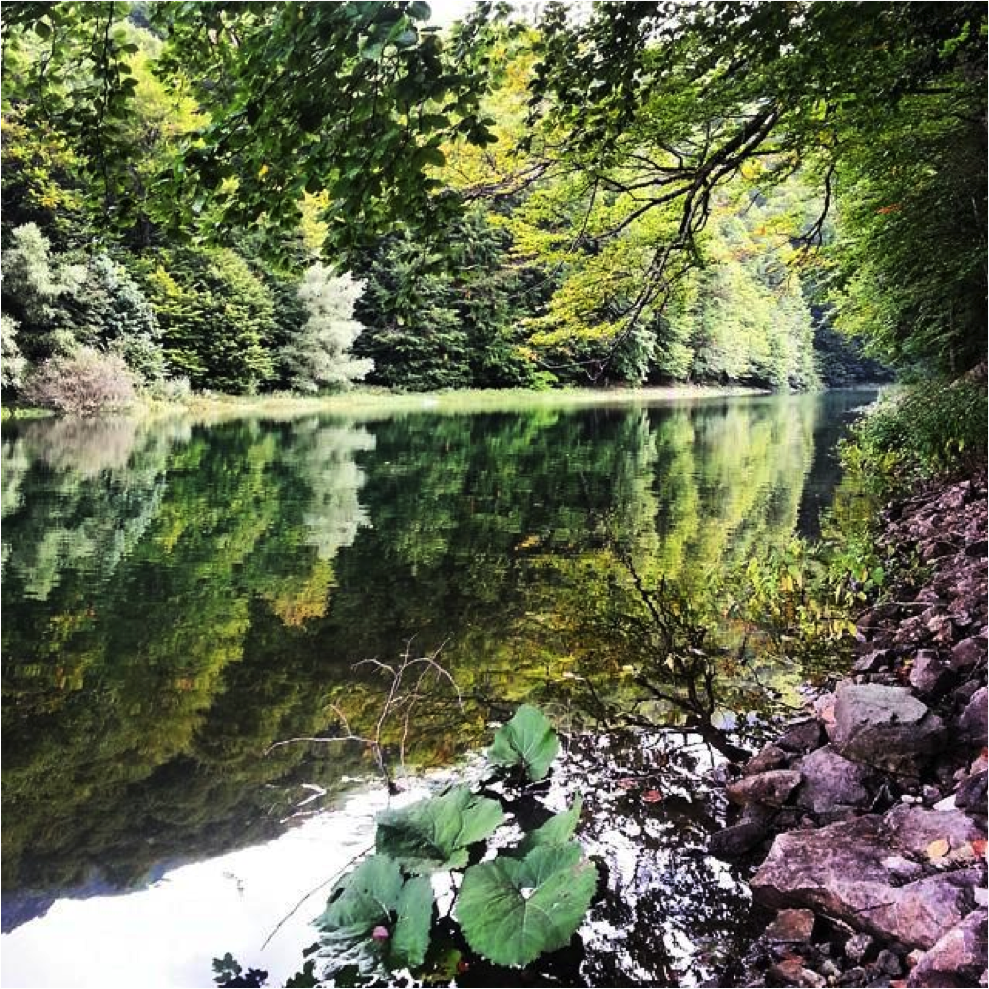

“I wasn’t able to puzzle out the origin of its name, but it isn’t too difficult to imagine what prompted the locals to refer to these lakes as the ‘eyes of the mountain.’”

Back To Kotor.
If you head back West through the heart of the country back toward Kotor, there is an impressive monastery carved out of cliff walls. I didn’t make it there during our trip, but it is another option if an Orthodox pilgrimage site with cave churches sounds like more fun than Biogradska Gora en route from Kotor to Durmitor.